Familiar daily routines
Gentle help with washing, dressing, meals and daily activities, always respecting the individual's pace, preferences and dignity.




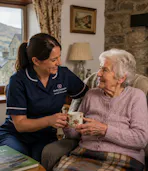
Helping someone you love feel safe, valued and comfortable in the place they know best — home.
Living with dementia or Alzheimer's can bring uncertainty for the whole family. Familiar faces, favourite routines and a little extra kindness can make an enormous difference. At Good Companions, our carers are trained in dementia and Alzheimer's care, and we take time to understand the person behind the diagnosis.
Talk to our friendly care teamCall 01228 594153It's the favourite armchair, the photographs on the mantelpiece, the garden outside the window — and the everyday routines that help life feel familiar.
For many people living with dementia, staying at home with appropriate support can offer comfort and continuity. Our approach is gentle, respectful and shaped around each person's preferences, abilities and changing needs.
We also understand that caring for someone you love can be exhausting. You deserve support and reassurance too.
Watch how the right support can help someone living with dementia remain connected to the people, places and routines they love.
Gentle help with washing, dressing, meals and daily activities, always respecting the individual's pace, preferences and dignity.
Friendly conversation, meaningful activities and a reassuring presence can help reduce feelings of isolation and uncertainty.
Practical assistance can give relatives breathing space, help them balance other responsibilities and spend more quality time together.
Sometimes a little help each day makes a big difference. Our visiting home care service can provide planned support, from shorter visits to more extensive daily assistance, depending on an individual assessment.
Our regulated visiting home care is delivered through Good Companions' CQC-registered home care service.
Explore visiting home careYou may notice missed meals, changes in personal care, increasing confusion, difficulty with familiar tasks or growing worry about someone being alone.
These changes do not automatically mean a move to residential care is necessary. They are good reasons to talk through what support might help and seek appropriate clinical advice when needed.
When several visits a day no longer provide enough support, a live-in arrangement may be worth considering. It is not suitable for every situation, but it can be an alternative to moving into a care home.
Live-in carers need agreed rest and breaks; “24-hour live-in care” does not mean one carer works continuously without sleep.
Having a carer living in the home can provide greater continuity, companionship and help with everyday life while preserving familiar surroundings.
Good Companions can discuss different live-in care options. Some arrangements involve a self-employed carer engaged and paid directly by the family and are separate from the organisation's CQC-registered services. Where regulated personal care is required, the appropriate registered service must be considered.
Understand your care optionsPerhaps you're a daughter worried about Mum, a husband supporting his wife, or a relative juggling work, children and daily visits. You may feel guilty about asking for help — even when you know something needs to change.
Asking for support is an act of care. Our team can listen to your concerns and discuss practical options without pressure or obligation.
You don't need to know exactly what type of care to ask for. Tell us what daily life looks like, what has changed and what worries you most.
Ask us about dementia careGood Companions has supported individuals and families across Cumbria for more than two decades.
Our carers receive training in dementia and Alzheimer's, helping them respond with patience, sensitivity and understanding.
Our registered home care and Silloth residential care services are rated Good by the CQC. Read about our CQC-registered services.
For people who may benefit from residential care, Good Companions also offers specialist dementia support at its Silloth care home. Our aim is to help families understand the available choices, not to assume one option is right for everyone.
Many people can continue living at home with appropriate support, particularly when their needs, home environment and safety are regularly reviewed. The right arrangement depends on the individual and may change over time.
Yes. Good Companions has confirmed that its carers are trained in dementia and Alzheimer's care. We tailor support to the person and their individual care plan.
Visiting care provides help at agreed times during the day or week. Live-in care involves a carer staying in the home to provide more continuous support, with appropriate breaks and rest arrangements. We can explain the different service and regulatory arrangements.
Yes. We can discuss the pressures you are experiencing and explore visiting care, more extensive home support or other options suited to your family's circumstances.
Its regulated home care and Silloth residential care services are CQC-registered and rated Good. Some self-employed direct-pay live-in care arrangements are separate from these services. See the full explanation and ratings.
Good Companions supports families across Cumbria, subject to the type of care required and local availability. Contact the team with your postcode to discuss options.
Whether you are planning ahead or need support now, tell us a little about your situation. We'll help you explore the next steps with kindness and clarity.
Call our home care team: 01228 594153
Email: admin@gchc.co.uk
Please avoid including detailed medical records or other sensitive health information in an initial enquiry.
Insert your Convertri enquiry form here.
Suggested fields: Name · Email · Telephone · Area/Postcode · Brief message · Privacy acknowledgement
This placeholder is not a working form.
Contact Us
We don’t share your personal info with anyone
About Good Companions
Good Companions provides compassionate residential care, home care and support services across Cumbria.
Some services are regulated and inspected by the Care Quality Commission (CQC), while certain support arrangements may operate separately from CQC registration requirements.
